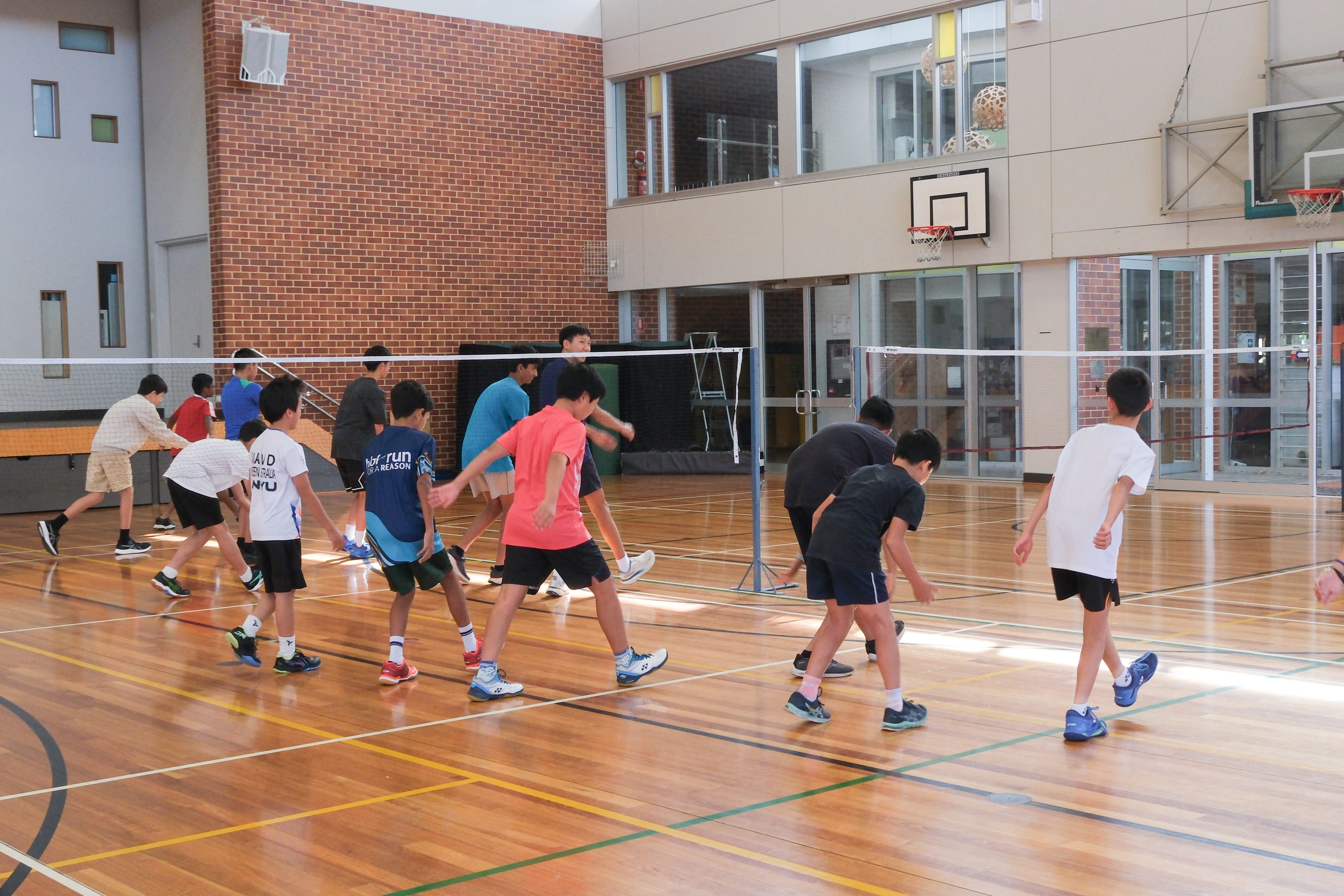

A guide to timing the journey: training, private coaching, and competition
Badminton is one of the most technical and physically demanding sports in the world. At the highest levels, matches are decided by inches, split-second decisions, and years of repetition. So it’s natural for parents to ask: “When should my child start?”
The short answer is: early but appropriately.
Here’s a breakdown of what that means across different ages and stages.
1. Early Childhood (Ages 5–8): Laying the Physical Foundation
At this age, the goal isn’t to develop a champion—it’s to build a complete mover.
Badminton requires:
- Excellent hand-eye coordination
- The ability to control the body with precision
- Mastery of movement patterns like lunging, jumping, twisting, and tracking a moving object while in motion
But these don’t need to come strictly from “badminton drills.” In fact, foundational skills like skipping, throwing, catching, hopping, and balancing are far more valuable at this stage. These are the building blocks of agility, spatial awareness, and racket control later on.
In this window, we recommend:
- Group classes focused on coordination, movement, and fun
- Exposure to a variety of skills around badminton: balloon games, target throwing, footwork patterns, catching with extension, and rhythm games
- Emphasis on social interaction and early psychological development—learning to listen, follow, share, and take feedback
Private training is not necessary at this age. The best “private” training is often playtime with variety and intention.
2. Foundation Stage (Ages 8–11): Learning the Basics of the Game
Around this age, children become more aware of their bodies, more consistent in movement, and more receptive to structured learning.
Now is the right time to:
- Introduce proper grip, footwork, and basic strokes
- Start forming technical foundations for clearing, lifting, and net play
- Learn rules, scoring, and rally structure through fun modified games
- Begin short, focused private sessions if there are specific learning needs or to reinforce what’s being taught in group training
Group training remains essential at this stage—not just for physical learning, but also for social and psychological development:
- Learning to work with others
- Accepting mistakes
- Competing in a fun, low-pressure way
- Developing resilience through challenge in a safe environment
3. Pre Teen Stage (Ages 11–13): Consolidation and Intro to Competition
This is a critical window where foundations must be reinforced before intensity increases.
Players should now:
- Attend regular structured group training
- Be introduced to more advanced footwork, tactical decisions, and stroke variation
- Use private training as a tool for ironing out habits and technical refinement
- Learn how to self correct and take ownership of feedback
Competition can begin, but cautiously.
While match play is valuable, children in this age range vary significantly in emotional maturity. Not all are ready to:
- Handle the pressure of results
- Process winning and losing constructively
- Compete without tying performance to self-worth
At Kaizen, we recommend using local tournaments and in house match play as learning opportunities not measuring sticks. Some children may be ready for regular tournaments. Others may benefit more from intra-club matches and practice games.
4. Teen Years and Beyond: Refinement, Identity, and High-Level Play
By this stage, if the foundation is strong, the player is well-positioned to:
- Pursue advanced technical and tactical development
- Specialise in singles or doubles depending on physical and psychological attributes
- Compete regularly in local and state tournaments
- Begin national ranking goals if aligned with motivation and ability
Private coaching becomes more valuable here as a custom tool:
- Identifying unique strengths and weaknesses
- Preparing for specific tournaments
- Fine-tuning tactical plans and mindset under pressure
Alternative Pathways: Starting Later with Transferable Skills
While the above stages represent an ideal timeline, not all players start young and that’s okay.
Some students come to badminton in their early teens or later, often with a background in other sports like tennis, gymnastics, soccer, or martial arts. These athletes may already possess:
- Excellent coordination
- Movement literacy and balance
- Awareness of body positioning and control
- Competitive instincts and emotional resilience
In these cases, private training becomes a key tool to:
- Quickly assess and align the athlete with appropriate technical and tactical expectations
- Fill in any badminton-specific gaps
- Streamline their integration into a group environment suited to their current skill level
With the right approach, late starters can progress rapidly sometimes even faster than early starters because they bring well-developed movement patterns and motivation to learn.
Why Kaizen Racket Club Follows This Approach
We don’t rush the process. We understand that badminton is a late-specialisation sport with early skill demands, meaning we must start with the right foundations but build patiently.
Our philosophy:
- Prioritise movement quality and coordination before skills
- Use group training to develop not just players—but people
- Introduce private coaching at the right time, not the earliest time
- Let competition follow development, not dictate it
- Honour individual pathways, whether a player starts at 6 or 16
In Summary:
| Stage | Focus | Private Training | Group Training | Competition |
| Ages 5–8 | Movement & Coordination | Not necessary | Play-based, fun, high energy | Not recommended |
| Ages 8–11 | Fundamental Skills | Optional short sessions | Structured skill based learning | Introductory or internal matches |
| Ages 11–13 | Skill Consolidation | Useful for technical focus | Competitive learning & gameplay | Local entry level events |
| 13+ | Refinement & Identity | Targeted and personalised | High performance group environment | Regular state & national tournaments |
| Late Starters | Transferable Movement | Fast-track skill alignment | Stage matched group placement | Case by case readiness |
 KaizenRacketClub